Appliance leaks are quiet, and the floor pays for it
.Appliance leak water damage comes from the machines that use water every day: a washing machine, a dishwasher, a refrigerator with an ice maker, and the utility sink and laundry drains. These leaks start small. The appliance hides the spot, the finish floor hides the wet subfloor, and nobody sees anything until the damage is advanced.
This page covers the appliance and the floor beneath it. Cabinets and kitchen finishes are on kitchen water damage, and a leaking tank is on water heater leak cleanup.
Where each appliance fails
.Washing machine
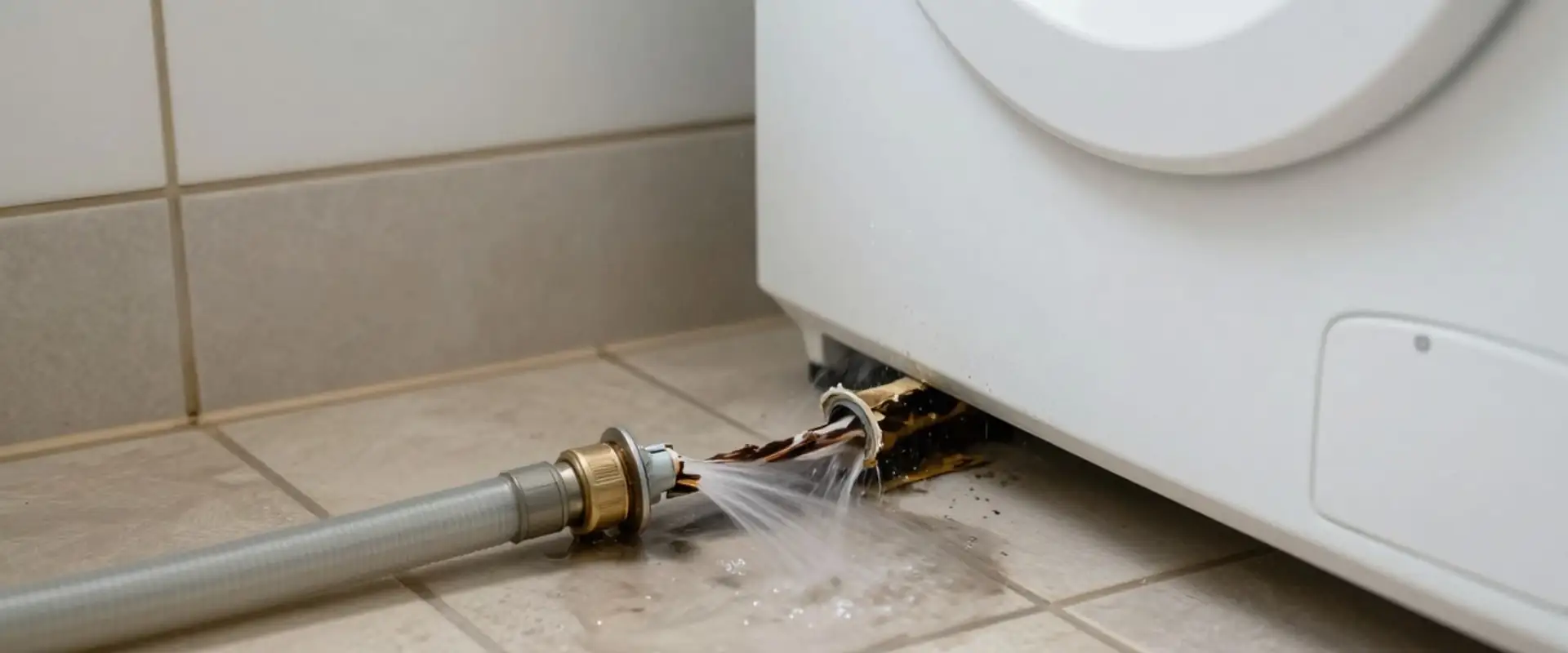
The supply hoses are under pressure whenever the taps behind the machine are open, and the drain hose can pop out of the standpipe during a spin cycle. A second-floor laundry room leaks into the ceiling below.
Dishwasher
The inlet line, the door gasket and the drain connection are the weak points. A leak shows first at the toe-kick, then in the cabinet floor and the flooring beside it.
Refrigerator ice maker
A thin supply line behind the fridge can crack or pull off a fitting. It can drip for weeks, soaking the subfloor under the whole refrigerator.
Utility sink and drains
A loose trap, a clogged drain or a sump pump discharge line that backs up can overflow. Water that comes up from a floor drain is a sewage matter, covered under sewage backup cleanup.
Slow leaks versus sudden ones
.A sudden failure is a hose that bursts or a machine that overflows, and the room is wet within the hour. The Washington Office of the Insurance Commissioner gives a dishwasher that overflows during a wash and an ice-maker line that snaps and sprays water over the kitchen floor as examples of sudden leaks that are usually covered if reported quickly.
A slow leak is the bigger risk to the building. The same office says insurers treat problems like these as maintenance, not sudden accidents, and that damage developing over more than a couple of days is generally not covered. A hose upgrade is cheap protection, and the office recommends braided stainless steel hoses over rubber.
| Sign | What it usually means |
|---|---|
| Floor soft or springy near the appliance. | The subfloor has been wet long enough to lose strength. |
| Vinyl or laminate edges lifting, tile loose. | Water is under the finish and moving sideways. |
| Musty smell near the washer or dishwasher. | Damp framing or insulation has been staying wet. |
| Stain on the ceiling below a laundry room. | Water has left the floor and reached the cavity. |
| Swollen toe-kick or baseboard. | Moisture is wicking up from the floor. |
| Water bill higher with no change in use. | A leak is running somewhere in the plumbing. |
Appliance leak safety: first steps
.Stop the water
Close the small valve behind the washer, under the dishwasher or behind the refrigerator. If you cannot reach it, close the main shut-off.
Unplug only if the floor is dry
Do not reach for a cord while standing in water. If the outlet is wet, switch off that circuit at a dry panel or call your electric utility.
Keep the machine from running
Do not use the appliance again until a technician has repaired the line.
Check the meter if unsure
Northshore Utility District says to note the meter reading, wait one or two hours with no water use, and read it again.
Call us for the water
Photograph what you see and call the dispatch line.
Water under the appliance?
Call the dispatch line. A person answers, and a crew can check the subfloor with moisture meters.
Why a hidden leak rots the subfloor
.Under vinyl, laminate or tile sits a plywood or composite subfloor. When an appliance leaks onto it, the wood absorbs water and the finish above hides it. Wood that stays wet over days softens and eventually decays, and the same moisture can reach joists and the ceiling below.
The Census Bureau puts Bothell's owner-occupied housing rate at 65.5 percent, so many households rent. If you rent, tell your landlord or property manager in writing the same day and keep your own photographs.
Our process for an appliance leak
.Locate the moisture
Moisture meters and a thermal camera show how far water traveled under the appliance.
Pull the appliance, open the toe-kick
Trim comes off so air can reach the subfloor.
Lift wet flooring
Pad, laminate or sections of vinyl come up where they cannot dry in place.
Dry and verify
Air movers and LGR dehumidifiers dry the structure, and readings are logged until dry targets are met.
Dry targets follow the published ANSI/IICRC S500 water damage standard, cited as a reference and not as a certification. The rebuild follows on water damage repair.
What affects the cost of appliance leak water damage
We explain scope and price before work starts.
How long it leaked
A slow weep soaks deeper than a sudden spill.
Flooring type
Vinyl, laminate, tile and carpet need different treatment.
Cabinets and walls
Wet cabinet bases and drywall add to the scope.
Floor below
A second-floor laundry that reached a ceiling adds a second area to dry.
Appliance repair is a separate service. Our scope covers the water damage.
Prevention that actually helps
.- Replace rubber washer hoses with braided stainless steel ones.
- Shut off the washer valves when you go out of town.
- Check behind the refrigerator and under the dishwasher a few times a year.
- Do not run the washer or dishwasher while you sleep or are out.
- Put a leak sensor on the floor beside the machine.
The same dispatch line serves Kirkland and Lynnwood.
Common questions about appliance leak water damage
Yes. The dispatch line is answered 24 hours a day, including nights, weekends and holidays. We offer same-day response when available and do not promise an arrival time. Shut off the water to the appliance while you wait.
A floor that feels soft, flooring edges that lift or a musty smell near the appliance are the usual clues. A moisture meter gives a reading, and a thermal camera shows the extent.
The Washington insurance commissioner says sudden leaks are usually covered when reported quickly. Slow leaks and maintenance issues usually are not. Ask your insurer.
No. An appliance technician or plumber repairs the machine or line. We dry and restore the area.
Shut off the water, then tell your landlord or property manager in writing. You can also call us for emergency drying. Keep your photographs.