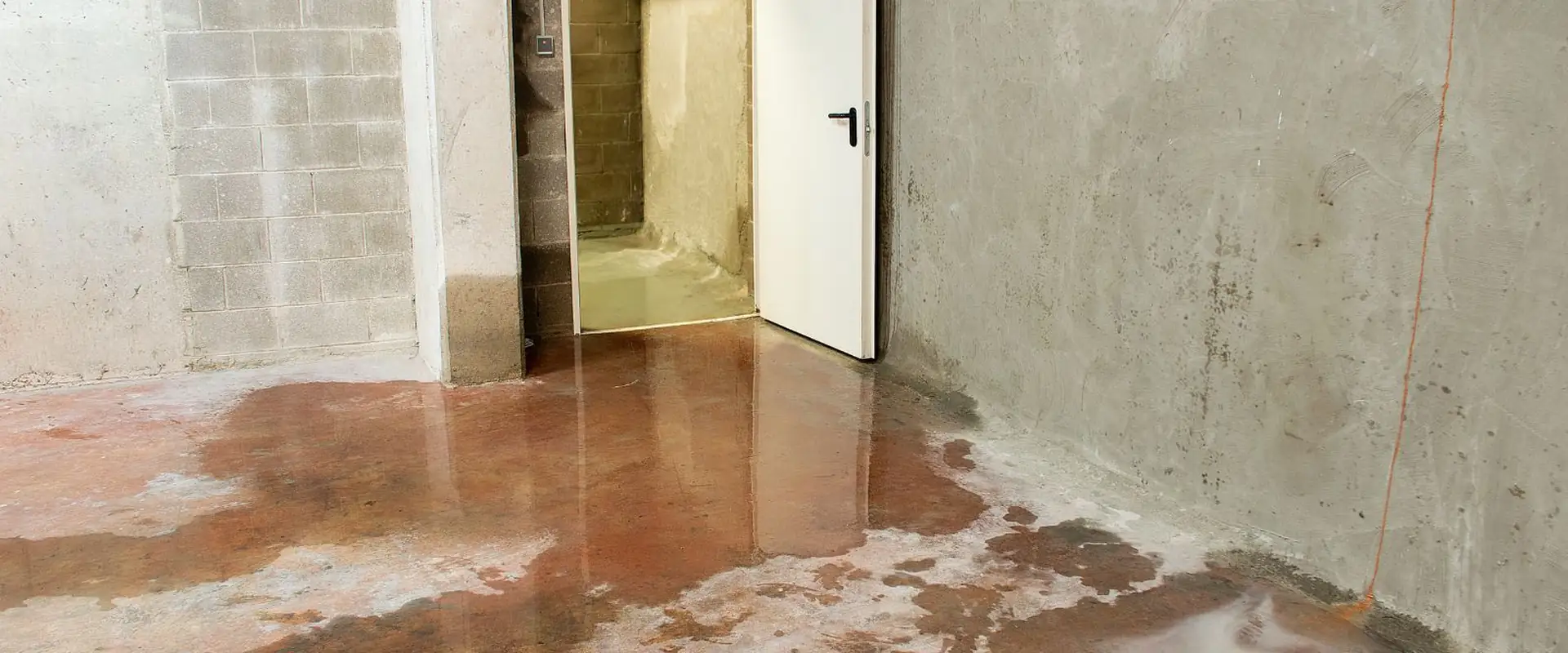
How water gets into Bothell basements
.A basement is a hole in wet ground, so water finds it through more routes than any other room. Rain pushes through the joint where the floor meets the wall. Window wells fill when their drains clog. A sump pump quits in a storm, and a sewer line can also back up through a floor drain. A pipe can burst above and run down the stairs.
This page covers basements that are partly or fully below grade, including finished ones with carpet and drywall. Rooms flooded by a river or creek belong to flood damage restoration. The space under a raised floor is covered on crawl space water damage, and the sewage case has its own page, sewage backup cleanup.
Seepage, window wells, sump failure and pipes
.| Source | What you see | What happens next |
|---|---|---|
| Wall or floor seepage. | Damp patch or beads of water that follow rain. | Carpet edges and the bottom of drywall wick moisture. |
| Window well. | Water on the sill and a wet wall below the window. | Trim and insulation behind the drywall stay wet. |
| Sump pump failure. | Pit full or overflowing, pump silent. | Water spreads across the slab and under walls. |
| Burst or leaking pipe above. | Ceiling stain or water running down the stairs. | Treated as clean supply water if caught early. |
| Drain backup. | Water rising from a floor drain. | Treated as contaminated, see the sewage page. |
King County also measured a shallow water table in the Woodinville part of the Sammamish River valley that moves roughly 2 to 4 feet between seasons, driven by precipitation and river stage. That study had no Bothell reading.
Basement safety: the first hour
.- Do not walk into standing water if the basement has outlets, a panel or a sump. Electricity and water together can kill. If the panel is in a wet basement, call your power utility or 911.
- Shut off the main water valve if a pipe is the source.
- Keep children and pets upstairs.
- Lift valuables, photograph the water level on the walls, and call the 24/7 line.
Water in the basement tonight?
Call the 24/7 line. A person answers and starts with what is safe to do.
Cleanup and drying sequence
.Stop or identify the source
A pipe is shut off. Seepage and sump failure are noted, because the cause decides what gets dried and how often water returns.
Extract the water
A submersible pump lowers deep water, then extraction units lift water out of carpet and off the slab.
Remove what cannot dry
Wet carpet pad, baseboard and the lower part of drywall are cut out. Insulation behind the drywall is removed with it.
Map and measure
Moisture meters and a thermal camera show how high the water wicked. The slab and the bottom plates of the walls are checked.
Dry with dehumidifiers
LGR dehumidifiers and air movers run in a closed room with the outside door shut. Concrete dries slowly, so the process is on structural drying and dehumidification.
Confirm
Readings are logged each visit. Rebuilding waits until the framing and slab read dry.
Finished basements: carpet, drywall and trim
.A finished basement hides water well. Water travels behind baseboard and under the bottom plate, so a wall can look fine while the cavity is wet. We check the cavity before closing anything up, and cut a clean opening rather than patching a wet wall.
Wet carpet over a concrete slab can sometimes be dried in place if the water was clean and caught quickly. Pad is usually removed. Drywall that stays wet loses strength and grows mold, so the EPA's line is to dry water-damaged material within 24 to 48 hours.
What affects the cost of basement water damage cleanup
We explain scope and price before work starts. The biggest drivers are listed here.
Water source
Clean, ground and sewage water need different handling.
Finish level
A bare slab and a finished room with carpet and drywall are different jobs.
Size and depth
More water and more floor area add pumping and equipment days.
Concrete
Slabs and block walls dry slowly and need monitoring.
Rebuild
Replacing drywall, flooring and trim is a separate scope.
Ask for the drying scope and the rebuild scope separately.
Avoiding a repeat
.- Clear window well drains and covers before the first fall storm.
- Test the sump by pouring water into the pit and make sure the float lifts.
- Consider a battery backup for the sump if the basement is finished.
- Look for repeating damp lines on walls after rain. They show where the water enters.
Insurers want the loss reported quickly, and delays can cost you coverage. We document water levels and affected materials with photographs. Your policy decides coverage. Basements in Kirkland and Lynnwood get the same dispatch line, and the drying work is judged against the published reference standard ANSI/IICRC S500, which we cite as a reference and not as a certification.
Common questions about basement water damage cleanup
Yes. The dispatch line is answered 24/7, including nights and weekends. We offer same-day response when available and do not promise an arrival time.
For a small spill on a dry panel and clear outlets, yes. For standing water near electrical, no. Deep water also needs a pump, and carpet needs proper extraction to avoid leaving the pad wet.
It depends on the cause. A burst pipe will not repeat if it is fixed. Seepage and sump failure can. We tell you what we saw so a plumber or drainage contractor can address it.
Not by itself. The EPA says to dry water-damaged areas within 24 to 48 hours to prevent mold growth, and that moisture control is the key. If a damp area has stayed wet for weeks, have it assessed.
Yes. Walls, carpet and trim trap moisture. Cavities often have to be opened to dry the framing and bottom plate.